
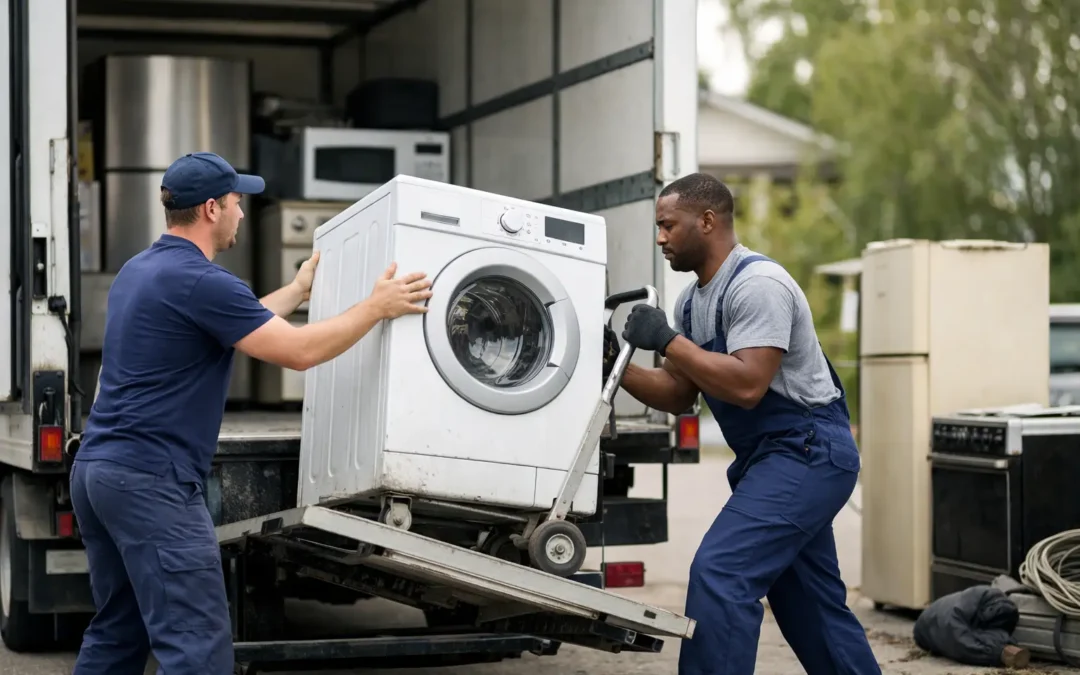
That old fridge in the garage usually sits there longer than anyone plans. Same goes for broken washers, outdated ovens, and heavy freezers that stopped being useful months ago. If you’re figuring out how to haul away appliances, the real question is not just how to move them – it’s how to get them out safely, legally, and without turning your back, walls, or driveway into the next problem.
Appliance removal sounds simple until you’re standing in front of a 250-pound unit with tight doorways, stairs, and no truck. Some jobs are manageable with the right setup. Others are better left to a crew that does this every day. The right approach depends on the appliance, its condition, and how quickly you need it gone.
How to haul away appliances without creating a bigger mess
Start with the basics. Before anything gets moved, make sure the appliance is fully disconnected. For refrigerators and freezers, that means unplugging the unit, emptying it, and letting any ice melt out ahead of time. For washers, dishwashers, and ice makers, water lines need to be shut off and drained. Dryers may involve a vent hose and, in some cases, a gas line. If gas is involved, caution matters. If you are not comfortable disconnecting it properly, do not guess.
The next issue is access. Measure doorways, hallways, gates, stair landings, and the appliance itself. A lot of damage happens not because the item is too heavy, but because someone forces a bad angle through a tight space. Remove doors if needed, protect floors with cardboard or moving blankets, and clear the route before lifting starts.
Weight distribution matters more than most people expect. Appliances are bulky, awkward, and often heavier on one side. A dolly with straps helps, but only if you know how to balance the load. Tilting a refrigerator too far can also create problems, especially if you plan to keep it working and move it to another location.
When a DIY appliance haul-away makes sense
If the appliance is already outside, access is easy, and you have help, a do-it-yourself removal may be reasonable. A small washer, compact dryer, or old microwave is a different job than a full-size built-in refrigerator or commercial freezer.
DIY works best when you have the right equipment, including a hand truck, tie-down straps, gloves, and a vehicle that can handle the load. A pickup may work for one item, but it still needs to be loaded and secured correctly. Appliances that shift in transit can damage the truck, the item, or worse.
It also helps to know where the appliance is going before you move it. Not every city allows appliances at the curb, and many transfer stations or landfills have specific rules for items containing metal, refrigerants, or electronic components. If your plan is “I’ll figure it out after I load it,” that usually leads to wasted time and an appliance still sitting around.
When professional appliance removal is the better move
If the item is upstairs, built in, leaking, rusted out, or too heavy to move safely, hiring a full-service junk removal team is usually the smart call. The same goes for landlords between tenants, property managers on a schedule, business owners clearing old breakroom equipment, or contractors trying to keep a job site moving.
A professional crew saves you from the hardest parts of the job: lifting, maneuvering, loading, hauling, and cleaning up afterward. That convenience matters when you are already dealing with a move, renovation, eviction cleanout, or office turnover. It also lowers the risk of damage to walls, floors, door frames, and vehicles.
For many customers, speed is the deciding factor. When you need an appliance gone now, same-day or next-day service is often more practical than borrowing equipment, finding help, and making multiple disposal calls. In a busy area like Covina and the surrounding communities, quick removal can keep a home project or property turnover on track.
Donation, recycling, or disposal?
Not every appliance belongs in the dump. If it still works and is clean, donation may be an option. Some local charities, reuse programs, and community organizations accept gently used appliances, especially basic kitchen or laundry units. The catch is that many only take certain items, and they may require the appliance to be in good working order with no major cosmetic damage.
Recycling is often the better route for broken or outdated units. Metal, wiring, and components can sometimes be recovered, and that keeps bulky waste out of the landfill when possible. Refrigerators, freezers, air conditioners, and other cooling appliances need extra attention because refrigerants must be handled properly. You cannot treat those like regular trash.
Disposal becomes the fallback when the item is too damaged, unsafe, or not accepted elsewhere. Even then, local regulations may affect how it needs to be handled. That is one reason many people choose a hauling service. You do not have to sort through disposal rules, loading requirements, and drop-off limitations on your own.
Appliances that usually need extra care
Some appliances are more straightforward than others. Microwaves, mini fridges, and standard washers are usually simpler than oversized, built-in, or utility-connected units. Refrigerators and freezers often require the most planning because of their size and the materials inside them.
Gas ranges and gas dryers deserve caution because disconnecting them incorrectly can create real safety issues. Built-in wall ovens and dishwashers can be tricky too, since they are attached to surrounding cabinets, power, or plumbing. Commercial appliances add another layer because they are often heavier, larger, and more expensive to damage.
If you are dealing with multiple appliances at once, the job changes again. A single pickup might be manageable. A full garage cleanout, rental turnover, or office breakroom removal is usually better handled as one coordinated haul-away.
What affects the cost to haul away appliances
Pricing usually comes down to volume, labor, and disposal requirements. A lightweight appliance with easy curbside access costs less to remove than a heavy unit buried in a second-floor laundry room. Stairs, narrow access, built-in installation, and added disassembly can all increase labor time.
Disposal fees also vary by appliance type. Refrigerant-containing appliances may involve special processing. Multiple items may be more cost-effective when removed together, especially if they fill a portion of a truck rather than requiring separate trips.
The best pricing is upfront pricing. You should know what the job will cost before the hauling starts, not after the item is on the truck. That kind of clarity matters whether you’re a homeowner getting rid of one old fridge or a property manager clearing several units at once.
A few mistakes people make when hauling appliances
The most common mistake is underestimating the job. Heavy does not just mean difficult – it means easier to drop, drag, and damage. Another mistake is forgetting to disconnect water, gas, or drainage lines completely before moving the item.
People also wait too long to think about disposal. They manage to get the appliance into the driveway and then realize their local pickup service will not take it. At that point, the problem is smaller, but it is not solved.
Then there is the issue of help. One person and a friend with good intentions is not always enough. If the appliance is awkward, the path is tight, or the item is simply too heavy, forcing the move usually costs more in repairs or injuries than professional removal would have in the first place.
The easiest way to decide
If the appliance is small, disconnected, easy to reach, and you already have the equipment and a legal drop-off plan, a DIY haul-away can work. If any part of that sentence does not apply, bringing in a crew is usually the faster and safer option.
That is why many customers choose a full-service company like I Am Junk, LLC. You point to what needs to go, and the heavy lifting, loading, hauling, and cleanup get handled for you. No scrambling for a truck, no guessing on disposal, and no wrestling a dead refrigerator through a hallway on a Saturday afternoon.
Old appliances take up space long after they stop being useful. Getting them out should feel simple, not like a weekend project that keeps getting pushed back.