An estate cleanout is not the same as clearing a crowded garage. You may be working through a family home full of memories, a rental that must be turned over quickly, or a property tied up in probate. The best way to approach how to manage estate cleanout work is to slow down at the start, make decisions in the right order, and bring in help before the physical work becomes overwhelming.
The goal is not to empty every room in one exhausting weekend. The goal is to protect what matters, clear what does not, and leave the property ready for its next step.
Start With Authority, Access, and a Deadline
Before anyone removes a box, confirm who has the legal authority to make decisions about the estate. That may be the executor, trustee, personal representative, or the person named in a written agreement among family members. This step prevents costly misunderstandings, especially when several relatives have keys, opinions, or sentimental claims on the same items.
Next, set the practical boundaries. Find out when the home needs to be sold, listed, returned to a landlord, renovated, or occupied by someone else. A clear deadline tells you whether you can sort slowly over several weeks or need a focused cleanout plan right away.
Secure the property before starting. Collect spare keys, forward mail if appropriate, remove obvious personal records from view, and make sure utilities are available for lighting and basic cleanup. If the home has been vacant, check for leaks, pest issues, damaged flooring, or unsafe areas before inviting family members or workers inside.
Make a Room-by-Room Inventory First
Walking through a full house and making decisions item by item is tiring. It also leads to the same questions being asked over and over: Should we keep this? Is it valuable? Does anybody want it? A simple inventory gives the process structure.
Take photos of each room before moving anything. Then note major categories: furniture, appliances, documents, jewelry, collections, tools, electronics, clothing, and household goods. You do not need a perfect spreadsheet for every spoon and paperback. You do need a record of items that may have financial, legal, or sentimental value.
Start with the obvious places for paperwork and valuables: filing cabinets, desks, bedroom drawers, closets, safes, storage bins, and old purses or wallets. Look for wills, property documents, tax records, bank statements, vehicle titles, insurance information, military records, and keys. Set these aside in one secure location rather than leaving them in a growing pile.
Be careful with items that look ordinary. Cash, coins, jewelry, watches, collectible cards, firearms, and small antiques can be tucked into drawers, coat pockets, books, or kitchen containers. If you find something you cannot identify, hold it for evaluation instead of adding it to a donation or hauling pile.
Use Clear Categories to Keep Decisions Moving
Once important papers and valuables are secured, label areas or boxes for keep, distribute, sell, donate, recycle, and remove. The category does not have to be permanent the moment an item is touched. A “review” area is useful for pieces that need an appraisal or a family decision.
Avoid making the whole home a review area. If every item is undecided, the project stalls. Give relatives a firm date to claim personal items, and communicate that unclaimed belongings will be handled according to the estate plan. Clear expectations are kinder than letting the process drag on for months.
Give Family Members a Fair, Defined Process
Estate cleanouts can bring up old family tensions. A practical system will not solve every disagreement, but it can prevent confusion from becoming conflict.
Share photos or a basic inventory with relatives who live out of town. Give everyone the same deadline to respond. For items wanted by more than one person, use a method agreed upon in advance, such as taking turns, drawing names, or allowing the executor to make the final call. Document major decisions by text or email so no one has to rely on memory later.
Sentimental value is real, even when resale value is low. A child may want a recipe box, a worn work jacket, or an old set of tools for reasons no appraisal can measure. At the same time, keeping every item because it belonged to someone you love can shift the burden from one home to another. Photos of meaningful objects can help when storage space is limited.
Decide What Is Worth Selling, Donating, or Removing
Not every item should be sold. Selling takes time, research, cleaning, photography, buyer communication, and pickup coordination. A solid wood dining set in excellent condition may be worth the effort. A damaged particleboard cabinet usually is not.
Consider professional appraisal for art, fine jewelry, coins, antiques, firearms, and collections that may have real value. For standard household goods, ask a simple question: will the likely return justify the time needed to sell it? If the answer is no, donation or removal may be the more practical choice.
Donate usable furniture, clean clothing, kitchenware, and household items when local organizations can accept them. Acceptance rules vary, and many groups cannot take mattresses, heavily worn furniture, large appliances, or items with stains, odors, or damage. Do not assume a donation center will take everything from the house.
Some materials need separate handling. Paint, chemicals, batteries, propane tanks, medications, electronics, and certain appliances may have disposal rules. Keep these items apart from general junk until you know the correct local option. Never pour chemicals down a drain or put loose medications where children, pets, or other people can reach them.
Plan the Cleanout in the Right Order
A cleanout goes faster when rooms are handled in a practical sequence. Begin with bedrooms, offices, closets, and storage areas where personal papers and valuables are most likely to be found. Then move through living areas, the kitchen, garage, sheds, and outdoor spaces.
Do not start by hauling large furniture out of a room that has not been searched. Once heavy items are moved, small belongings are easier to overlook, and the work area becomes more chaotic. Sort first, then remove.
If the property needs to be listed for sale, focus on getting it empty and broom-clean rather than trying to make it look renovated. Cleanout and deep cleaning are different jobs. Likewise, hauling can clear a garage, but it will not repair drywall, repaint rooms, or resolve a major pest problem. Knowing the difference helps you schedule the right help and avoid last-minute surprises.
Know When Full-Service Hauling Makes Sense
A DIY approach can work for a small apartment, a few bags of donations, or a family with plenty of time and strong backs. It becomes harder when there are multiple rooms of furniture, stairs, a packed garage, heavy appliances, or a deadline tied to a sale or lease.
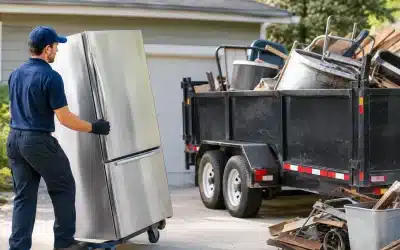
A full-service junk removal crew handles the lifting, loading, hauling, and final sweep-up. That means you can point out what needs to go rather than renting a truck, finding help to load it, making several disposal trips, and dealing with leftover debris at the end of the day. For estate work, ask for upfront pricing based on the amount of material, labor needs, and any special disposal requirements.
In Covina and throughout the surrounding San Gabriel Valley, I Am Junk can help clear unwanted furniture, appliances, household debris, garage contents, and bulky items after the keep, sell, and donate decisions are made. The most efficient appointment is one where items are clearly marked or grouped, access is available, and the decision-maker is present to answer questions.
Protect Yourself and the Property During the Work
Wear closed-toe shoes and gloves. Use caution around broken glass, mold, rodent droppings, unstable stacks, and heavy furniture. Do not try to move oversized cabinets, refrigerators, or exercise equipment without enough help and the right equipment. A rushed lift can turn a cleanout into an injury.
Keep a final check system before each room is cleared. Open drawers, look behind doors, check cabinets, and inspect closets one more time. Then take an after photo. This is especially useful for executors, landlords, and property managers who need a record of the condition in which the space was left.
When the last truck leaves, walk the property slowly. Check the attic, garage, shed, side yard, mailbox, and every closet. Estate cleanouts are emotional work, but a calm process keeps it manageable. Make the next right decision, clear one area at a time, and let the empty space become a practical step forward.