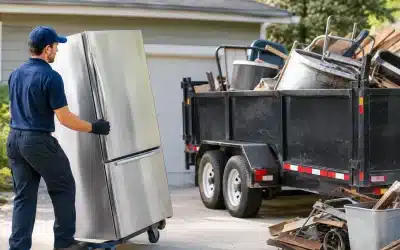
That old sectional may look manageable until it has to clear a tight hallway, go down three porch steps, and fit into a vehicle. When comparing hauling versus self loading, the real question is not just who puts items in the truck. It is who handles the labor, transportation, sorting, disposal, and cleanup after the items leave your space.
For a few lightweight boxes, self loading can make sense. For a garage packed with years of clutter, a rental turnover, or a job site with heavy debris, full-service hauling can save a day of work and prevent a lot of avoidable headaches. The right choice comes down to the size of the job, the items involved, your available time, and how much lifting you are willing to take on.
Hauling versus self loading: what is the difference?
Self loading means you do the physical work. You may rent a dumpster, borrow a truck, fill a trailer, or use a disposal service that drops off a container and returns later to pick it up. You decide what goes in, carry it from the property, load it safely, and usually handle any sorting required by the provider or disposal facility.
Full-service hauling means a removal crew does the work for you. You point out the unwanted items, and the crew handles lifting, carrying, loading, hauling, and a final sweep of the area. Pricing is generally based on the amount of truck space used, labor needs, and disposal costs.
Both options remove junk. The difference is where the responsibility falls. Self loading can lower the service price when you have the time, equipment, and help. Hauling puts the job on a trained crew so you can keep your day moving.
When self loading is a practical choice
Self loading works best for small, straightforward projects. If you are clearing a few bags of yard waste, broken-down cardboard, or lightweight items from a ground-level garage, loading your own vehicle may be the simplest route. It can also work when you have a reliable truck, enough people to lift safely, and flexibility in your schedule.
A dumpster can be useful for a renovation that creates debris over several days. Instead of arranging multiple pickups, you can load material as the project continues. This is often a good fit for contractors who already have a crew on site and know how to separate acceptable materials from items that require a different disposal method.
Still, the advertised price of a rental or disposal option is not always the final cost. Check the container size, weight allowance, rental period, driveway placement rules, and overage fees. A container that is too small can lead to a second rental. One that is too large can mean paying for unused space.
Self loading asks more than muscle
The physical work is only one part of the job. You need a plan for getting bulky items out without damaging walls, floors, gates, or stair rails. Appliances, mattresses, old furniture, and construction materials can shift during transport if they are not secured correctly.
You also need to know where everything can go. Many disposal facilities have rules about mixed loads, electronics, paint, batteries, chemicals, tires, refrigerants, and other restricted items. Making an extra trip because an item was refused can erase the savings you expected from doing it yourself.
When full-service hauling is worth it
Full-service hauling is built for the jobs people put off because they are too heavy, too large, too messy, or too time-consuming. A crew can remove a couch from an upstairs apartment, clear out a packed garage, haul away an old refrigerator, or load construction debris without requiring you to rent equipment or recruit friends.
It is especially helpful when time matters. Landlords and property managers may need a unit cleared between tenants. A business may need old desks, chairs, shelving, or equipment gone before an office reconfiguration. Homeowners may be preparing for a move, estate cleanout, renovation, or sale. In those cases, the value is not only the labor. It is getting the space back quickly.
A dependable hauling team also reduces the number of decisions you have to make. You do not need to estimate how many pickup loads a cleanout will take, figure out how to dispose of a damaged appliance, or spend your weekend driving back and forth to a landfill. You get a clear price, a scheduled arrival window, and a crew that finishes the removal.
Heavy, awkward, and dirty jobs favor a crew
Some items are not good candidates for self loading, even if they technically fit in a pickup. Large entertainment centers, sleeper sofas, exercise equipment, water heaters, oversized desks, and demolition debris can be difficult to move safely. The risk increases when there are stairs, narrow access points, uneven ground, or limited parking.
Then there is the cleanup. Loose debris, dirt, broken materials, and small pieces left behind can turn an otherwise finished project into another chore. Full-service removal should leave the pickup area clear so you can use the space right away.
Compare the true cost, not just the first quote
A self-loading option may appear cheaper at first because the labor is not included. But the total can grow once you add rental fees, fuel, dump charges, equipment, straps, protective gear, extra help, and time away from work or family. If the load is larger than expected, the cost can rise again.
Full-service hauling usually has a higher upfront price because it includes labor and transport. That price can be the better value when the crew removes everything in one visit and handles the disposal process. It is also easier to budget when you receive transparent pricing before work starts.
Ask yourself a simple question: if the job takes twice as long as expected, can you still finish it without creating a bigger problem? If the answer is no, hauling is likely the better choice.
Choose based on the job in front of you
For a few manageable items, self loading may be enough. For a larger cleanout, compare your options using the full picture:
- Item size and weight: Can you lift, carry, and secure each item without risking injury or property damage?
- Access: Are there stairs, elevators, narrow hallways, locked gates, or long carrying distances?
- Time: Do you need the area cleared today, or can the project stretch over several days?
- Disposal needs: Are you dealing with appliances, electronics, renovation debris, or materials with special rules?
- Vehicle capacity: Will one load do the job, or will you be making repeated trips?
If the work involves only a small load and you already have the right vehicle, self loading can be a sensible choice. If the job includes bulky items, mixed materials, a tight deadline, or more labor than you want to handle, full-service hauling removes the burden.
Get ready for either option
A little preparation makes both routes faster. Separate anything you plan to keep, set aside personal documents, and make sure the path to the items is clear. If possible, take a quick inventory of large pieces such as appliances, furniture, or equipment so you can request an accurate quote or reserve the right container size.
You do not need to drag everything to the curb for a full-service pickup. In fact, keeping items where they are can prevent unnecessary lifting and damage. Just identify what stays and what goes, then let the removal team take it from there.
For Covina-area homes, rentals, offices, and work sites, I Am Junk, LLC keeps the process straightforward: you point to the junk, the crew handles the heavy work. Choose the option that protects your time, your property, and your back – then enjoy having your space back.